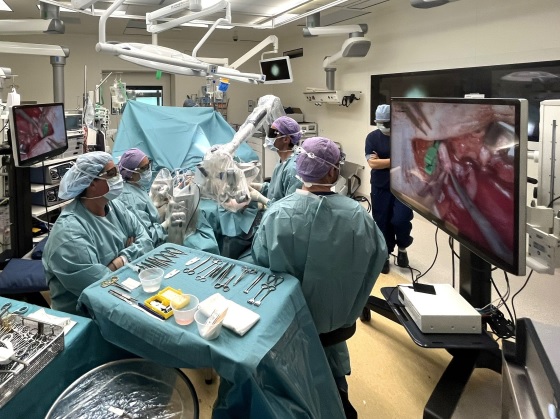
China’s market for robotic surgical systems is projected to grow at a compound annual rate of 12% from 2026 to 2036, according to a GlobalData forecast. The research firm estimates that China accounted for around 30% of the Asia-Pacific market for these systems in 2025.
GlobalData expects demand to be supported by wider use of minimally invasive procedures and an ageing population. The forecast describes a potential market trajectory, rather than a measure of how widely robotic surgery is currently used across Chinese hospitals.
Expansion will depend in part on whether hospitals can make the systems financially viable, said GlobalData medical devices analyst Divya Soni. Beyond the purchase price, hospitals must account for consumables, surgeon training and the number of procedures needed to justify the investment. Soni said manufacturers will need to demonstrate clinical and economic value as competition increases.
The market forecast comes as Medtronic pursues a collaboration with Hong Kong-based Cornerstone Robotics, which has manufacturing operations in China. Medtronic has agreed to invest approximately $700 million under the arrangement and secured rights to distribute Cornerstone’s Sentire surgical system in selected markets outside the United States where it has regulatory approval. Medtronic plans to offer Sentire alongside its Hugo robotic-assisted surgery system.
According to the information supplied by GlobalData, Sentire has market approval in Singapore and received a CE mark in May 2026 for minimally invasive general, gynaecological, thoracic and urological procedures. Medtronic says Hugo is used in more than 35 countries and expects the global number of procedures performed with the system to exceed 50,000 by the end of its fiscal year. How far robotic surgery spreads beyond major hospitals in China will depend on access to equipment, procedure costs and whether hospitals can use the systems often enough to support continued investment.
