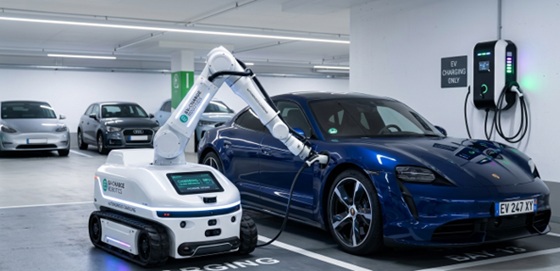
The global market for robotic electric-vehicle charging systems is projected to grow from $1.18 billion in 2024 to $14.1 billion by 2033, according to research from Growth Market Reports. The research forecasts a compound annual growth rate of 32.6% between 2025 and 2033. Growth is expected to be supported by increasing electric-vehicle adoption, expansion of charging infrastructure and investment in automated charging technologies.
Robotic charging systems are designed to connect electric vehicles to charging equipment with limited or no human intervention. Developers are incorporating artificial intelligence, sensors and other automation technologies to enable systems to identify vehicles, position charging connectors and manage charging operations.
Rising EV ownership is expected to increase demand for automated charging infrastructure, particularly in Europe, North America and Asia. Government programs and incentives supporting electric-vehicle adoption are also contributing to the expansion of charging networks in those regions.
The deployment of additional public and private charging stations could create further demand for robotic systems, particularly at facilities handling large numbers of vehicles. Potential applications include commercial charging locations and residential installations, as well as facilities where operators seek to automate charging processes.
The market nevertheless faces barriers to wider deployment. Robotic charging equipment can require relatively high upfront investment, which could constrain adoption in some markets. Differences among vehicle designs, charging interfaces and technical standards can also complicate the development of systems intended to serve multiple EV models.
Growth Market Reports identified Asia-Pacific and Latin America as potential expansion markets as governments in those regions develop programs supporting EV adoption and charging infrastructure. The extent of robotic charging deployment will depend partly on whether suppliers can develop systems that are cost-effective and compatible with different vehicles and charging configurations.
Companies identified in the research’s competitive landscape include Tesla, ABB, Siemens, Hyundai Motor Group, Volterio, EV Safe Charge, RoboCharge, Aiways, Hevo and ENDELOS Energy.
Further development of the sector is expected to include greater integration of artificial intelligence, internet-connected systems and energy-management software. Such technologies could be used for functions including predictive maintenance and electricity-load management as charging networks expand.
