Light Origins has introduced Light-O1, a model trained on human movements reconstructed from video and then adapted to different robots. The Singapore-based company reports that increasing the amount of human-action training data reduced prediction errors after adaptation to two humanoid robot platforms.
For its comparison, the company trained six versions of the same four-billion-parameter base model using between 3.75 billion and 120 billion multimodal tokens. It then adapted the versions separately to human, Unitree G1 and its own LightBot data. On held-out data from each group, the larger pretrained models made fewer errors when predicting subsequent actions and whole-body poses.
The results concern prediction accuracy after training with data from each target robot. They do not show that a model trained only on human video can control those robots, or that increasing pretraining data improves the rate at which robots complete tasks in the real world.
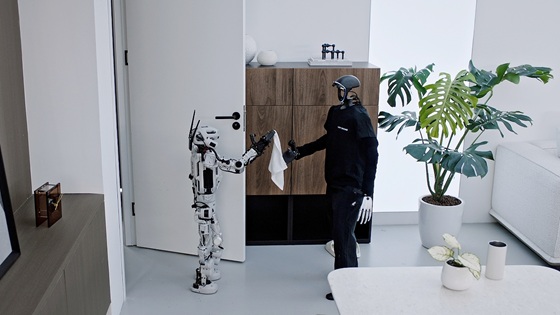
Light Origins separately demonstrated LightBot putting slippers in a cabinet, collecting rubbish and handing over a towel. A Unitree G1 was shown wiping a table and receiving a towel. The company has not provided comparative task-success figures for those demonstrations.
Light Origins says it is also releasing a preview model that turns written instructions into whole-body action sequences, along with model weights and code. The work explores whether video of human activity can provide a useful starting point for robot training, where collecting data directly from each machine requires substantial time and equipment.
